Friday, September 28, 2007

Thursday, June 07, 2007
Friday, June 01, 2007
Funeral de Graham Chapman, monty phyton's
Increíbles hasta en lo más jodido. Dejo el texto completo que john Cleese escribió para el funeral en inglés. A ver si tengo tiempo y lo traduzco.Bestial
Graham Chapman, co-author of the ‘Parrot Sketch,’ is no more.
He has ceased to be, bereft of life, he rests in peace, he has kicked the bucket, hopped the twig, bit the dust, snuffed it, breathed his last, and gone to meet the Great Head of Light Entertainment in the sky.
And I guess that we’re all thinking how sad it is that a man of such talent, such capability and kindness, of such intelligence should now be so suddenly spirited away at the age of only forty-eight, before he’d achieved many of the things of which he was capable, and before he’d had enough fun.
Well, I feel that I should say, “Nonsense. Good riddance to him, the freeloading bastard! I hope he fries. ”
And the reason I think I should say this is, he would never forgive me if I didn’t, if I threw away this glorious opportunity to shock you all on his behalf. Anything for him but mindless good taste. I could hear him whispering in my ear last night as I was writing this:
“Alright, Cleese, you’re very proud of being the first person to ever say ’shit’ on British television. If this service is really for me, just for starters, I want you to be the first person ever at a British memorial service to say ‘fuck’!”
You see, the trouble is, I can’t. If he were here with me now I would probably have the courage, because he always emboldened me. But the truth is, I lack his balls, his splendid defiance. And so I’ll have to content myself instead with saying ‘Betty Mardsen…’
But bolder and less inhibited spirits than me follow today. Jones and Idle, Gilliam and Palin. Heaven knows what the next hour will bring in Graham’s name. Trousers dropping, blasphemers on pogo sticks, spectacular displays of high-speed farting, synchronised incest. One of the four is planning to stuff a dead ocelot and a 1922 Remington typewriter up his own arse to the sound of the second movement of Elgar’s cello concerto. And that’s in the first half.
Because you see, Gray would have wanted it this way. Really. Anything for him but mindless good taste. And that’s what I’ll always remember about him—apart, of course, from his Olympian extravagance. He was the prince of bad taste. He loved to shock. In fact, Gray, more than anyone I knew, embodied and symbolised all that was most offensive and juvenile in Monty Python. And his delight in shocking people led him on to greater and greater feats. I like to think of him as the pioneering beacon that beat the path along which fainter spirits could follow.
Some memories. I remember writing the undertaker speech with him, and him suggesting the punch line, ‘All right, we’ll eat her, but if you feel bad about it afterwards, we’ll dig a grave and you can throw up into it.’ I remember discovering in 1969, when we wrote every day at the flat where Connie Booth and I lived, that he’d recently discovered the game of printing four-letter words on neat little squares of paper, and then quietly placing them at strategic points around our flat, forcing Connie and me into frantic last minute paper chases whenever we were expecting important guests.
I remember him at BBC parties crawling around on all fours, rubbing himself affectionately against the legs of gray-suited executives, and delicately nibbling the more appetizing female calves. Mrs. Eric Morecambe remembers that too.
I remember his being invited to speak at the Oxford union, and entering the chamber dressed as a carrot—a full length orange tapering costume with a large, bright green sprig as a hat—-and then, when his turn came to speak, refusing to do so. He just stood there, literally speechless, for twenty minutes, smiling beatifically. The only time in world history that a totally silent man has succeeded in inciting a riot.
I remember Graham receiving a Sun newspaper TV award from Reggie Maudling. Who else! And taking the trophy falling to the ground and crawling all the way back to his table, screaming loudly, as loudly as he could. And if you remember Gray, that was very loud indeed.
It is magnificent, isn’t it? You see, the thing about shock… is not that it upsets some people, I think; I think that it gives others a momentary joy of liberation, as we realised in that instant that the social rules that constrict our lives so terribly are not actually very important.
Well, Gray can’t do that for us anymore. He’s gone. He is an ex-Chapman. All we have of him now is our memories. But it will be some time before they fade.
Sacado de www.islaplanesia.com
Thursday, May 31, 2007
Wednesday, May 30, 2007
Thursday, May 24, 2007
Historias de cronopios y famas
Un cronopio pequeñito buscaba la llave de la puerta de la calle en la mesa de luz,la mesa de luz en el dormitorio, el dormitorio en la casa, la casa en la calle. Aquí se detenía el cronopio, pues para salir a la calle ecesitaba la llave de la puerta
¡¡¡LYNCHIANOS DEL MUNDO, UNIOS!!!
viernes 1 a las 22,00 y sabado 2 a las 20,00 esas son las citas.
DEJAD QUE VUESTROS CEREBROS SE ACERQUEN A MI...

DEJAD QUE VUESTROS CEREBROS SE ACERQUEN A MI...

Wednesday, May 23, 2007
Tuesday, May 15, 2007
Wednesday, January 10, 2007


Sunday, January 07, 2007

Thursday, January 04, 2007
A BELEN CASTORCILLOS

hala, como esto de las felicitaciones de navidá y ano nuevo es un coñazo o escrotón, según convenga ahí va la felicitación do nene... FELIZ CULO NUEVO, que no me funciona la eñe
Saturday, November 25, 2006
Imagenes contra el olvido
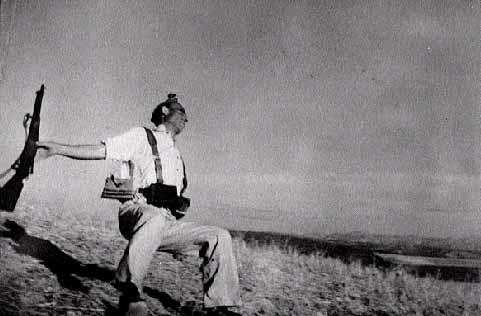
Este es el título del ciclo de documentales que a partir del miércoles 28 de noviembre se proyecta en Filmoteca. Así se presenta:
Las diferentes películas que forman este ciclo de documentales sobre la memoria histórica en España repasan el espectro de los numerosos ámbitos donde actuó la represión franquista desde el levantamiento militar del 18 de julio de 1936. Si una cosa parece clara es que, desde ese día, el franquismo no pretendió otra cosa que lo que hizo y llevó a cabo durante la década que siguió al final de la guerra.
Las víctimas de la brutal represión tuvieron que aprender a vivir sin expresar el duelo por sus familiares asesinados, fusilados, o encarcelados bajo la clara amenaza expresada por el general Franco: España seguía en guerra.
El largísimo mantenimiento de un régimen tan opresivo y su absoluta impregnación social llevó a las víctimas a perpetuar su silencio. Con la llegada de la transición democrática se pensó que no habría manera de que esto saliera bien si no hacíamos el esfuerzo de olvidar viejas rencillas. Las víctimas del régimen que terminaba, que habían ido creciendo en número a lo largo de casi cuarenta años de dictadura, asumieron esta difícil realidad. La democracia llegó a España.
Tres décadas después de la muerte del general Franco, muchas de esas victimas han fallecido sin que ninguna institución oficial haya reconocido las injusticias y el dolor que tuvieron que soportar a lo largo de sus vidas. Las personas que estamos intentando llevar a cabo una recuperación de la memoria histórica en los últimos años, nos preguntamos si era necesario llegar a esta situación en la que el olvido se ha hecho innecesariamente cruel; pero también pensamos que si actuamos correctamente no todo está perdido.
La intención de los directores que hemos realizado estos documentales es la de ser un eslabón mas en la cadena de actuaciones que pretenden poner fin a esta situación ominosa. Pensamos que la mejor manera de hacer conocer esta parte de la historia era unirnos y organizar un ciclo itinerante con la máxima difusión dentro y fuera de España. Nuestra intención es dar a conocer los avatares que tuvieron que vivir muchas personas y preguntarnos los cómos y los porqués de haber llegado hasta hoy sin haber prestado atención a quienes, al fin y al cabo, lucharon, murieron, fueron encarcelados o sufrieron el exilio por defender una democracia.
Sabemos de la sensibilidad positiva existente en bastante parte de la sociedad hacia el movimiento de recuperación de la memoria histórica. La mayoría de los documentales que forman el ciclo han sido estrenados en cine o televisión con muy buena aceptación de público. Un público que quería saber cosas que nadie le había contado o que sólo lo habían contado en su casa.
El ciclo se lleva pasando en diferentes lugares de la península con muy buen resultado desde mediados del año 2005. A la proyección de las películas se suman las charlas y conferencias de los directores, con el objeto de responder a las preguntas de los asistentes, de comunicar los motivos que nos llevaron a la realización de los documentales y la experiencia del contacto con el trabajo de las asociaciones y con las víctimas y protagonistas de esa época. Como es lógico nuestra pretensión es de máxima oficialidad. Nos dirigimos a instituciones culturales nacionales e internacionales como forma de terminar con este limbo en el que hemos vivido tantos años.
Es necesario abrir ciertas heridas para que sanen de verdad, ciertas heridas que hasta nuestros días estaban cerradas en falso.
IMÁGENES CONTRA EL OLVIDO pretende formar parte de esta cura, que tal vez sea la última.
www.imagenescontraelolvido.com
Subscribe to:
Posts (Atom)

